 Home of Lishui
 Lishui News
 Cultural tourism
 Investment cooperation
 About Lishui
Current position: English > Cultural tourism > Tourism activities
Recently, the 2025 list of provincial-level cultural heritage sites was officially announced, and the ancient canal in Lishui—Yanzhi River—has been successfully included. This ancient waterway, which has flowed for over 600 years and carries a touch of legend in its name, has earned the provincial-level "cultural name card" certification for its profound historical significance and unique cultural value.
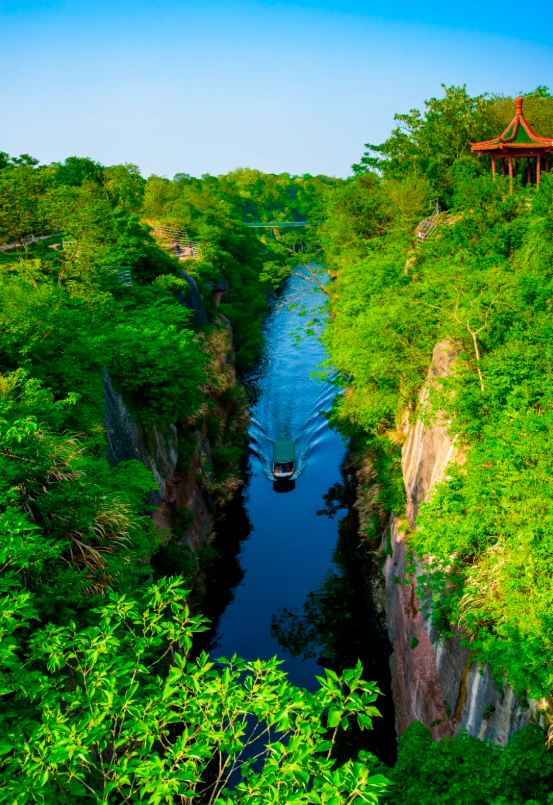
Carved by Tens of Thousands: A Thousand-Mile Waterway
Yanzhi River is located 2 kilometers west of the main city of Lishui, with a total length of 7.5 kilometers. It is named after the Yanzhi Ridge through which it flows.
During the Hongwu period of the early Ming Dynasty, to ensure the smooth transportation of grain to Nanjing, Emperor Zhu Yuanzhang ordered Chongshan Hou Li Xin to oversee the excavation of this river, connecting the Qinhuai River and Shijiu Lake. When the project reached Yanzhi Ridge, it encountered hard rock layers. Without gunpowder for blasting, the craftsmen invented the "burning hemp to split rocks" method: they filled gaps in the rocks with hemp fibers, poured tung oil over them, set them ablaze until the rocks turned red-hot, and then splashed water to rapidly cool them, causing the massive stones to crack under thermal expansion and contraction.
Faced with complex geological conditions, tens of thousands of laborers worked under Li Xin's direction, "carving day and night, burning hemp to split rocks, breaking boulders to form the river." Historical records show that during the peak of the project, over 750,000 laborers and more than 1,400 officials were mobilized, while the entire population of Lishui County at the time was only about 230,000. This highlights the enormous scale of the project. The scene was vividly described as "tens of thousands of laborers like ants, hoes and spades like clouds, and axes and chisels like rain," painting a grand picture of the construction.
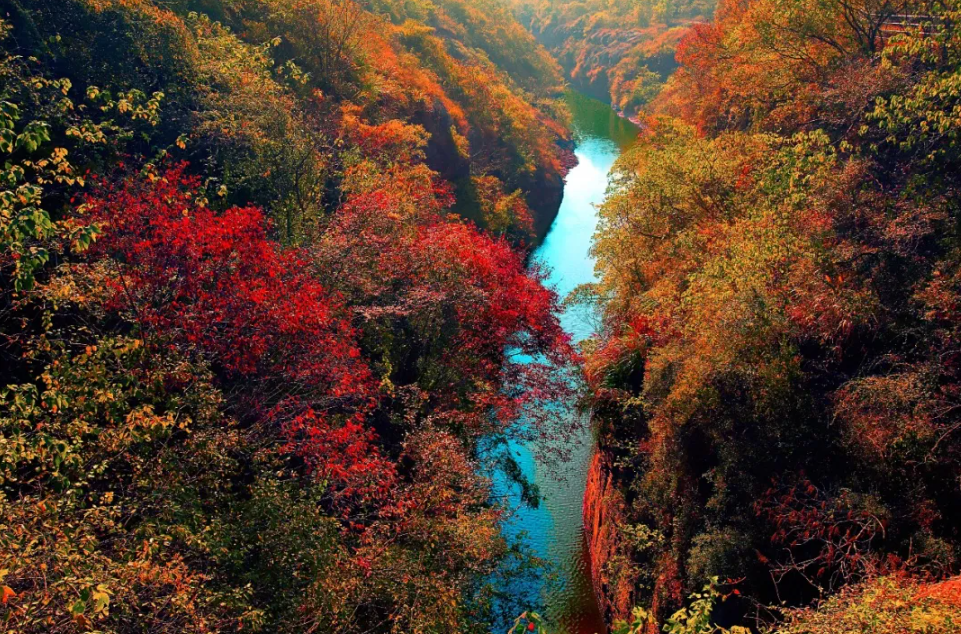
Starting in the 24th year of the Hongwu era (1391), it took nearly five years for this artificial canal, embodying countless wisdom and sweat, to finally be completed. It once became a vital grain transport lifeline connecting the Taihu Lake basin to Nanjing, allowing grain and supplies from the Jiangnan region to be conveniently transported to the capital.
A River Revitalized: Bridging Past and Present
With the Ming Dynasty's relocation of the capital to Beijing, Yanzhi River's grain transport function gradually diminished. Combined with natural siltation, the river was largely abandoned by the Qing Dynasty. However, its story did not end there.
In modern times, Yanzhi River welcomed a revival. In the 1970s, a ship lock was built on the river, reconnecting the Qinhuai River and Shijiu Lake. In recent years, with the completion of the Honglan Ship Lock and the full opening of the Wushen Canal, the ancient Yanzhi River section has been integrated into the modern high-grade waterway network, allowing ships from Taihu Lake to travel directly to Nanjing. It has transformed from a historical transport route into a part of contemporary waterborne economic activity.
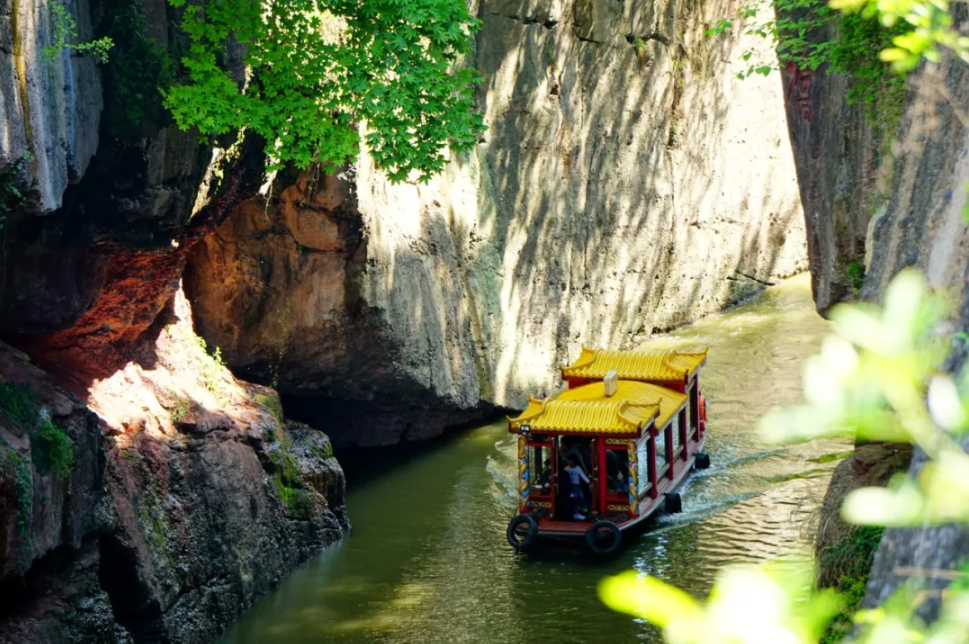
At the same time, Yanzhi River, together with the naturally formed "Tiansheng Bridge" over it, has long become a well-known scenic spot as a national AAAA-level tourist attraction. In 2021, it was selected as a literary landmark of Nanjing's "City of Literature of the World." The river carries the wisdom of Ming Dynasty water conservancy, grain transport culture, and a national memory engraved in the land, holding immense research, heritage, and tourism value.
Today, as we stroll along the banks of Yanzhi River, gazing at the towering reddish-brown cliffs and the serene winding blue-green waters, it feels as if we can hear echoes of history—the clanging sounds of rock-splitting, the bustling noise of grain transport boats, blending with the sound of modern tourist boats cutting through the waves and the admiration of visitors, weaving together a distant yet vibrant symphony of past and present.
Yanzhi River, this "rouge-colored" waterway that has flowed for six centuries, is now writing an even more moving chapter in the new era's tapestry with its new identity as a cultural heritage site.
Copyrigh 2008-2025Nanjing LiShui district people's government

